Chemical & Environmental Engineering · UC Riverside

Chemistry innovation for Environmental sustainability

I am Jinyu Gao, Assistant Project Scientist at UC Riverside. My research combines chemical discovery, engineering innovation, and artificial intelligence (AI) to advance sustainable water treatment and critical resource recovery.

jgao034@ucr.edu

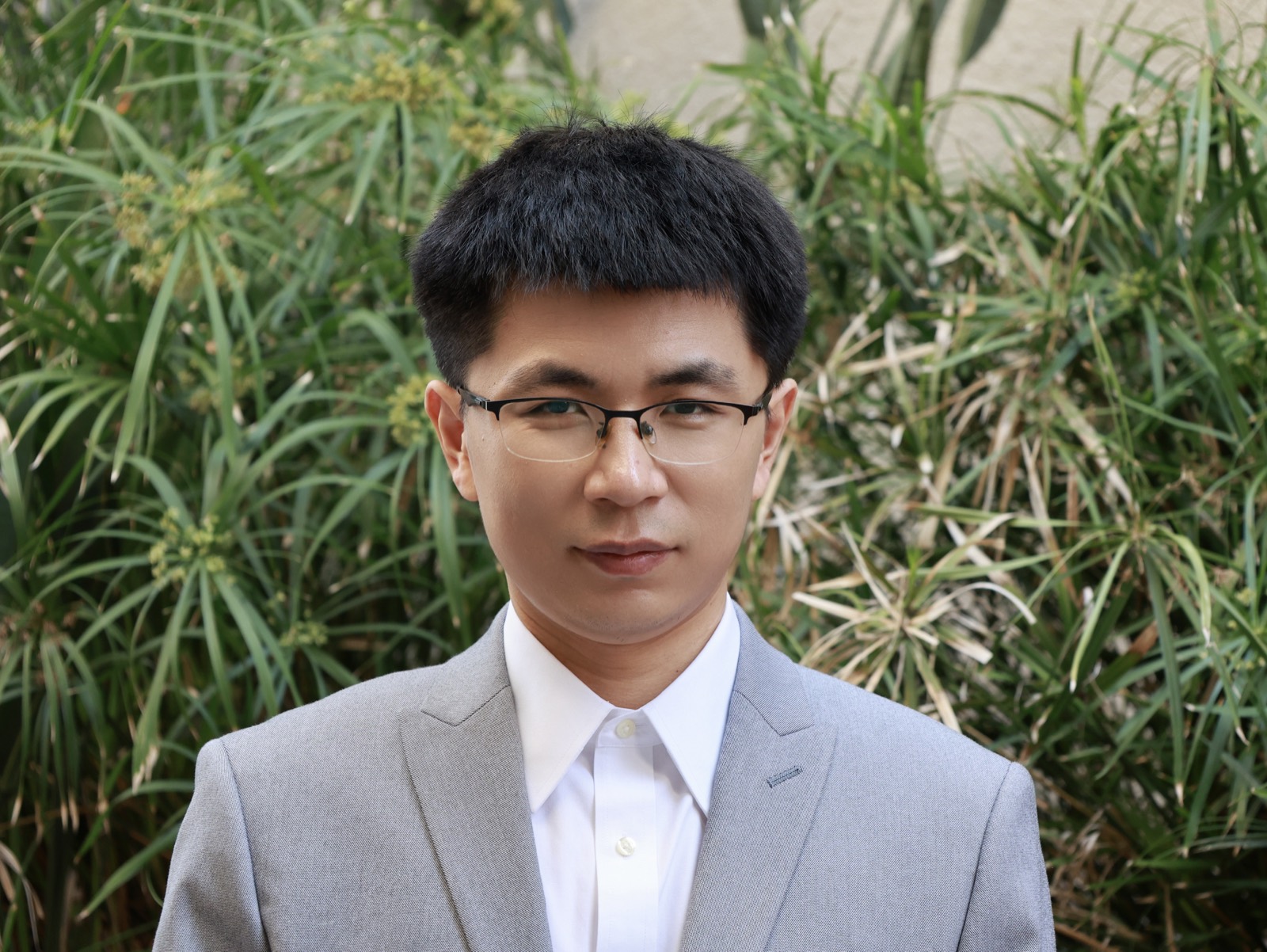
Portrait of Jinyu Gao, wearing glasses and a light gray jacket, standing in front of green plants.
Jinyu Gao, UC Riverside.

What my past work has found.

01

Destruction technologies for an urgent treatment need.

Persistent contaminants, such as per- and polyfluoroalkyl substances (PFAS), create an urgent engineering need for destruction. I invented a photochemical system that is more atom-economic and cost-effective. The technology is patented, licensed to an industrial partner, and destroys PFAS in real waste streams. Beyond developing new reaction chemistry, I have addressed important yet often overlooked controls on photochemical treatment performance (ES&T 2025). I have also integrated photochemical and catalytic processes to expand the range of contaminants treatable within a coordinated treatment system (ES&T Letters 2026).
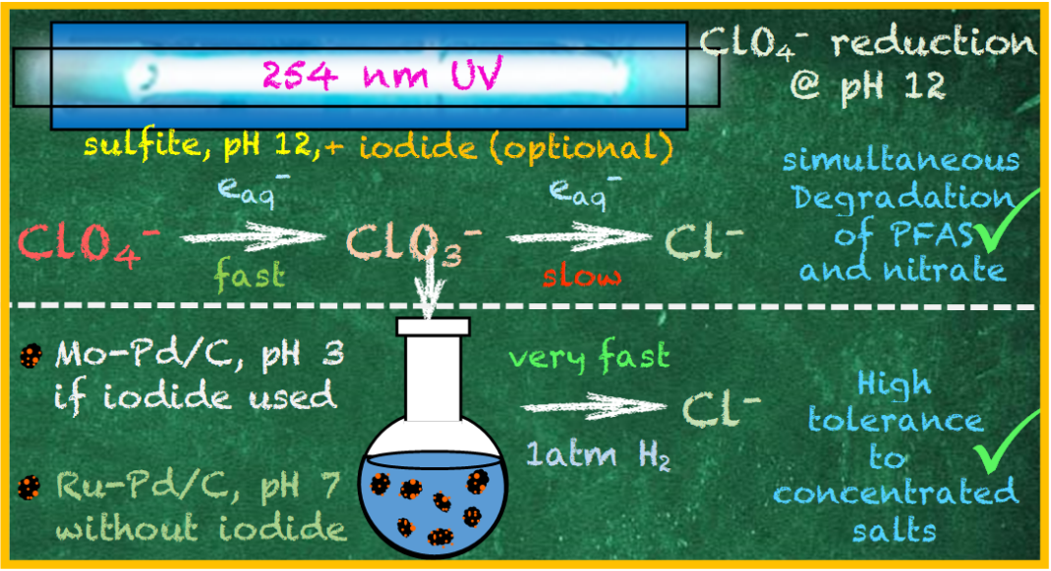
Scheme of the integrated treatment train: 254 nm UV with sulfite at pH 12 converts perchlorate to chlorate, a palladium catalyst then reduces chlorate to chloride under hydrogen, and PFAS and nitrate degrade at the same time.
Photochemical and catalytic steps in one treatment train.

02

Mechanism, at the level of the molecule.

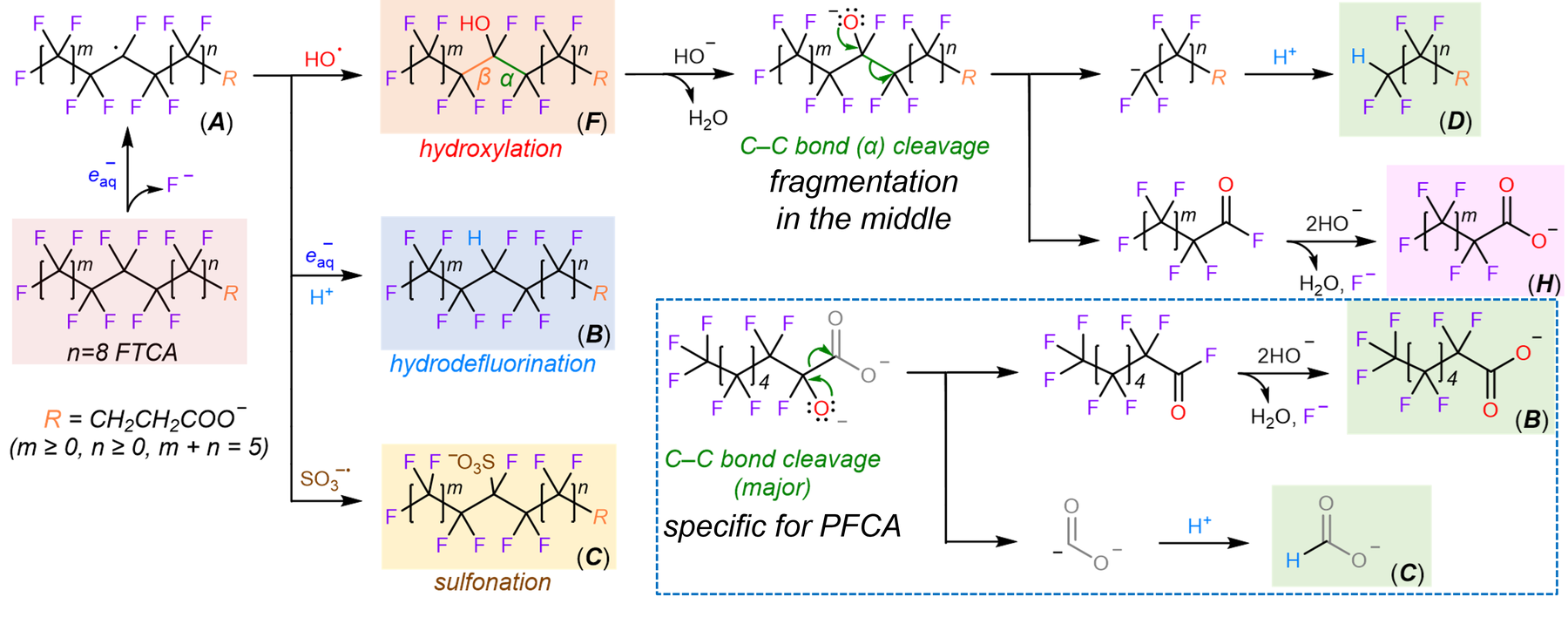
Alongside the technology, I have worked out how molecular structure governs whether a contaminant degrades. I have examined more than 150 PFAS structures through photochemical treatment and, using LC-HRMS, identified a series of transformation products nobody had reported. Two examples are the hydrogenated PFAS, where a single terminal hydrogen redraws the reaction map (ES&T 2021), and the chlorinated PFAS, where the carbon–chlorine bond is the door to deeper defluorination (Nature Water 2023). The follow-up work on legacy PFAS produced the most comprehensive degradation pathway scheme to date (Nature Water 2026).

Scheme of elucidated PFAS degradation pathways, showing hydroxylation, hydrodefluorination, sulfonation, and carbon–carbon bond cleavage that fragments the chain in the middle.
Elucidated PFAS degradation pathways under UV treatment.

03

Catalysts, found by walking the periodic table.

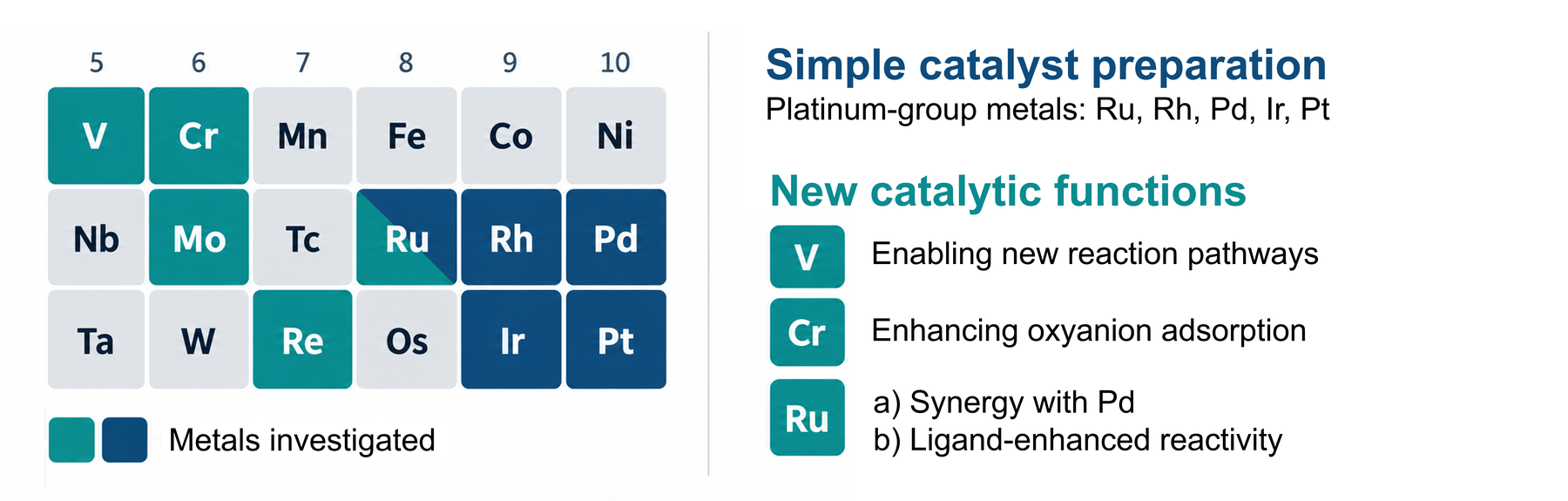
Toxic oxyanions — perchlorate, chlorate, nitrate, bromate — need efficient reductive treatment. I developed an in-situ synthesis that makes a range of metal catalysts at room temperature, with no furnace and none of the long procedures the conventional recipes demand (ACS ES&T Engineering 2021). I then worked through the Group 5–8 transition metals for reductive catalysis. Adding vanadium (ES&T 2023), chromium or aluminum (ES&T 2023), or ruthenium (ES&T 2023) raised activity by orders of magnitude and cut precious-metal demand by up to 90%. A bioinspired ligand–metal interaction then reduced perchlorate at neutral pH and ambient temperature, conditions long considered ineffective (ACS Central Science 2026).

Periodic table excerpt of groups 5 to 10 marking the metals investigated, with the new catalytic functions found for vanadium, chromium, and ruthenium.
Catalyst innovation across the periodic table.

04

AI for transformative environmental solutions.

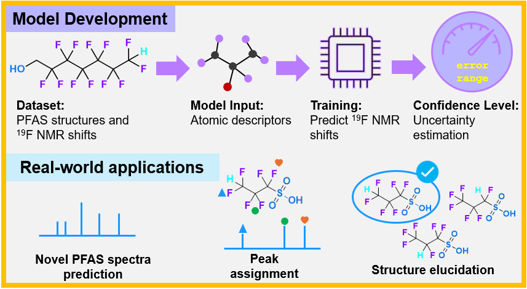
Identifying an emerging contaminant is hard when no authentic reference standard can be bought and the analytical signal is difficult to read. I developed machine learning models that predict 19F NMR chemical shifts, connecting a molecular structure to a spectral feature you can measure (ES&T 2026). The models helped interpret spectra and let us identify unknown PFAS in industrial wastewater. That combination — chemical analysis, AI model development, and experimental verification — is the foundation I want to extend to other analytical methods and to predictive tools for other environmental applications.

Diagram of the machine learning workflow: a dataset of PFAS structures and fluorine NMR shifts feeds atomic descriptors into training, which predicts shifts with an uncertainty estimate, and is then applied to spectra prediction, peak assignment, and structure elucidation.
From training data to prediction to structure elucidation.